
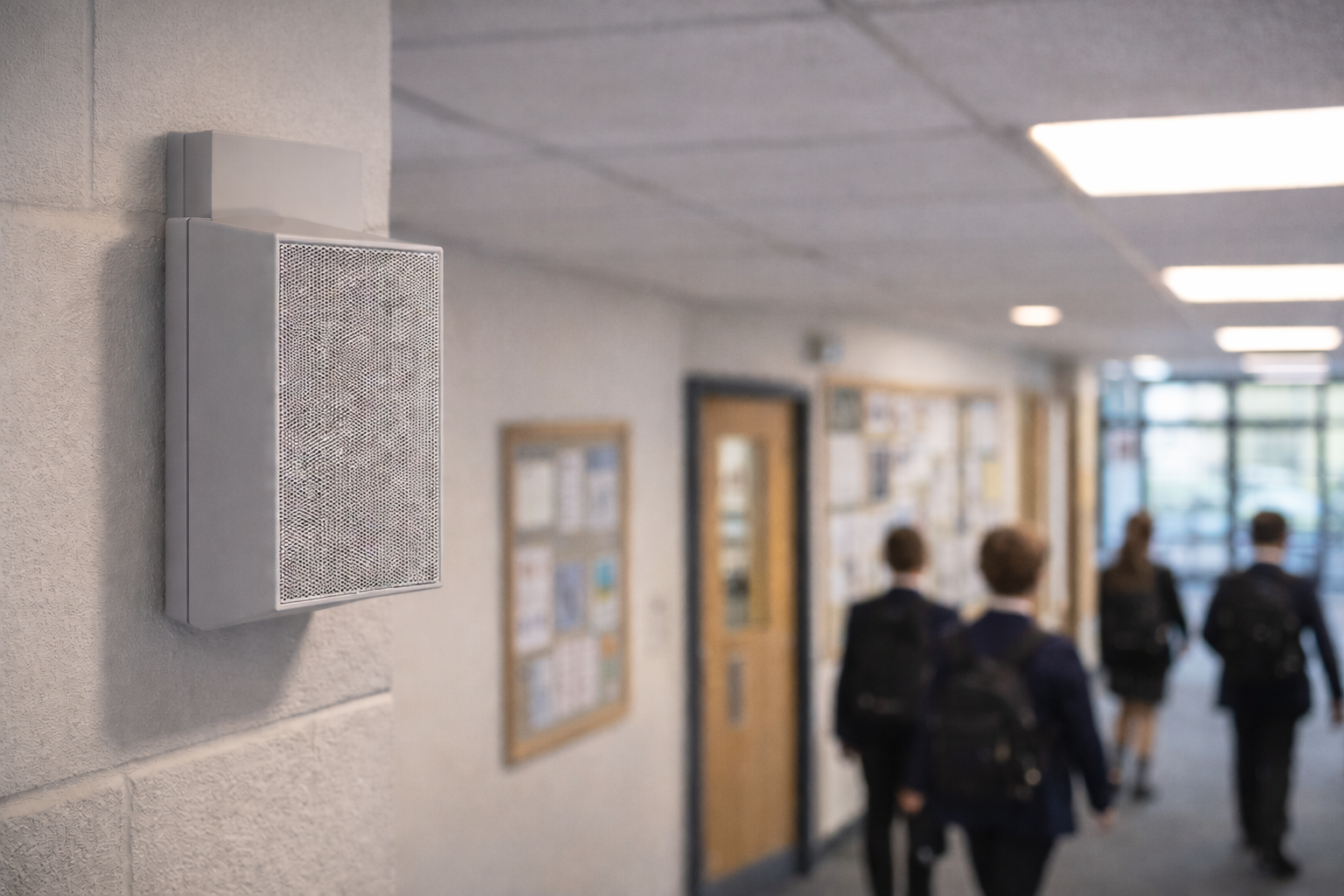
The Terrorism (Protection of Premises) Act 2025 — better known as Martyn’s Law — received Royal Assent on 3 April 2025. Named in memory of Martyn Hett, who was killed in the 2017 Manchester Arena bombing, this landmark legislation marks one of the biggest changes to UK public safety law in a generation. It stands as one of the most significant pieces of legislation in over two decades. For schools, it introduces clear legal obligations around emergency preparedness that every headteacher, business manager and governing body needs to understand.
With an implementation period of at least 24 months, the government expects enforcement to begin by April 2027. That may feel like a long way off, but the time to start preparing is now. The right technology can make compliance straightforward and affordable. It can also prove genuinely useful far beyond just ticking a legislative box.
What Is Martyn’s Law?
At its core, Martyn’s Law requires publicly accessible premises and events to take proportionate steps to prepare for, and respond to, terrorist incidents. Think of it like fire safety legislation. Every school already has fire evacuation plans, alarm systems and regular drills. Martyn’s Law extends that same duty of preparedness to the threat of terrorism.
The Act creates two tiers of obligation. The tier depends on how many people are typically present at the premises:
Standard Tier applies to premises expecting between 200 and 799 individuals (including staff). These venues must appoint a responsible person and register with the Security Industry Authority (SIA). They must also put appropriate public protection procedures in place.
Enhanced Tier applies to premises expecting 800 or more individuals. These venues face additional requirements around physical security measures, documented compliance and the appointment of a designated senior individual.
What Does This Mean for Schools?
Here is the important detail: the legislation includes a special consideration for education settings. Early years, primary, secondary and further education premises will always fall within the Standard Tier. This applies even when combined staff and pupil numbers exceed 800. Enhanced Tier requirements such as mandatory bag searches, CCTV installation or additional monitoring systems will not apply to schools.
This is a sensible recognition that schools already maintain robust safeguarding and security frameworks. However, Standard Tier compliance is not optional. Schools must demonstrate they have appropriate procedures across four key areas:
1. Evacuation — clear procedures for getting everyone safely out of the building and away from danger.
2. Invacuation — procedures for bringing people inside, or moving them to safe areas within the building, when the threat is external.
3. Lockdown — securing the premises by locking doors and restricting entry to prevent an attacker from gaining access.
4. Communication — the ability to alert everyone on the premises to danger, quickly and clearly.
The responsible person is typically the headteacher, business manager or governing body. They must ensure procedures are in place and that staff understand them. The school must also register with the SIA. The Act explicitly states that Standard Tier compliance should be simple and low-cost. The focus is on procedures and preparedness, not expensive physical alterations.
But many school leaders are now asking a key question. How do you reliably execute a lockdown or invacuation? What if you cannot instantly reach every room, corridor and outdoor space on your site?
The Communication Challenge
Of those four pillars, communication is arguably the linchpin that holds the other three together. An evacuation plan only works if everyone knows to evacuate. A lockdown procedure only protects people if staff can trigger it instantly and everyone on site can hear it. If raising the alarm means a staff member running down a corridor or relying on a telephone cascade, you have a significant gap. Martyn’s Law specifically aims to close it.
Many schools have no public address infrastructure at all. Others have ageing tannoy systems that only cover certain areas, with blind spots in newer extensions, temporary buildings or outdoor spaces. Traditional PA systems required dedicated cabling infrastructure, separate from the school’s data network. Retrofitting could cost tens of thousands of pounds before a single speaker went up.
How SchoolSafe Helps Schools Meet Their Obligations
SchoolSafe, our IP-based hybrid public address and lockdown solution, solves exactly this problem — and it does so in a way that aligns perfectly with the Standard Tier’s emphasis on proportionate, cost-effective measures.
Built on Your Existing Network
Unlike traditional PA systems that demand entirely new cabling infrastructure, SchoolSafe runs over your school’s existing IT network. Every speaker and device connects via standard Ethernet and draws power through Power over Ethernet (PoE), which means no separate power supplies, no specialist cabling contractors and dramatically lower installation costs. If you have a network point in a room, you can have a SchoolSafe speaker in that room — it really is that straightforward. Think of it like adding a new printer to your network rather than rewiring the building.
Instant, Site-Wide Emergency Alerts
SchoolSafe allows authorised staff to broadcast live voice messages across the entire school — or to targeted zones — at the press of a button. You can store pre-recorded emergency messages and alarm tones on the system and trigger them instantly using break-glass call points, panic buttons or the central control panel. Critically, emergency alerts automatically override any scheduled activity — whether a lesson changeover tone or a background music playlist. When staff declare an emergency, every speaker on site delivers the alert immediately.
Lockdown and Panic Buttons
SchoolSafe supports classroom panic buttons that connect back to the front office over the school network, enabling staff to call for immediate assistance. For lockdown scenarios, break-glass triggers can initiate full or partial lockdown alerts across the site. Staff and students receive clear, audible instructions on what to do and where to go. This directly addresses the lockdown and communication requirements of Martyn’s Law in a single, integrated system.
Hybrid Flexibility
If your school already has a legacy bell or intercom system, SchoolSafe does not require you to rip it out and start from scratch. As a hybrid solution, it can integrate with existing equipment whilst extending coverage to areas that are currently unserved. This protects your previous investment and lets you upgrade incrementally. You can cover the main building first, then extend to new blocks, outdoor areas or temporary classrooms as budget allows.
Day-to-Day Value Beyond Compliance
Martyn’s Law compliance is essential, but SchoolSafe earns its place every single day, not just during emergencies. The system includes a web-based control panel. Use it to manage bell schedules, page staff or students, play announcements and run background music for events. It replaces outdated school bell systems with a modern, flexible platform that the office team will genuinely enjoy using.
Start Preparing Now
The Home Office is still finalising the statutory guidance, but the Act already clearly defines the four pillars of compliance — evacuation, invacuation, lockdown and communication. Schools that start reviewing their procedures and addressing infrastructure gaps now will be well ahead of the curve. Enforcement begins in 2027.
For many schools, the missing piece is not a plan on paper. It is the ability to communicate that plan instantly to every person on site, when it matters most. That is exactly what SchoolSafe delivers.
To find out how SchoolSafe can help your school prepare for Martyn’s Law, visit our SchoolSafe product page. Contact SchoolCare today for a no-obligation consultation and site survey.